I wake up at 7:10 and rush to get my bag together. It is dark and I won’t be able to turn on any lights without waking everyone up. Luckily, I know hostel etiquette and packed my stuff the night before. I just have to make sure I have my camera charger because fuji x100t batteries have notoriously short lives.
It’s 7:20 by the time I get out of the hostel.
I lug everything on my back, my winter jacket is folded into my “board” pocket, and I start to run. Google maps is working well and it says it’ll take nearly 30 minutes to get there. I know if I run I can cut it down to nearly half.
I run a few blocks before feeling like I have to throw up. Three hours of sleep and a heavy dose of beer isn’t sitting well this early in the day. I settle on a light jog.
I finally see the train station and panic not knowing what track the train is leaving from. I have 4 minutes before the train leaves. A new friend texts me that it is number 10, I see this fact repeated on the platform sign. There’s no time for breakfast.
I run onto the platform, board the train and sit down. It leaves shortly thereafter. I’m happy I forced myself out of bed. The sun is just rising and what looks like steam or mist engulfs us as we travel through the Romanian landscape.
I want to look around but sleep sporadically overwhelms me.
I am woken up by the attendant and inform him that I’ll be getting off at Sinaia.
I pay 27 lei, it’s more than expected but it’s a fast ride and I arrive in little more than an hour.


Views From the train window
I am on my way to Sinaia because everyone I’ve met has told me that Peleș Castle is much prettier and memorable than Bran castle and I figure if this many people believe it then they can’t be wrong.
We arrive in Sinai and I walk across the road from the train station with my heavy backpack and begin walking multiple flights of stairs. At the top, I find myself near the entrance to the Dimitrie Ghica Park.
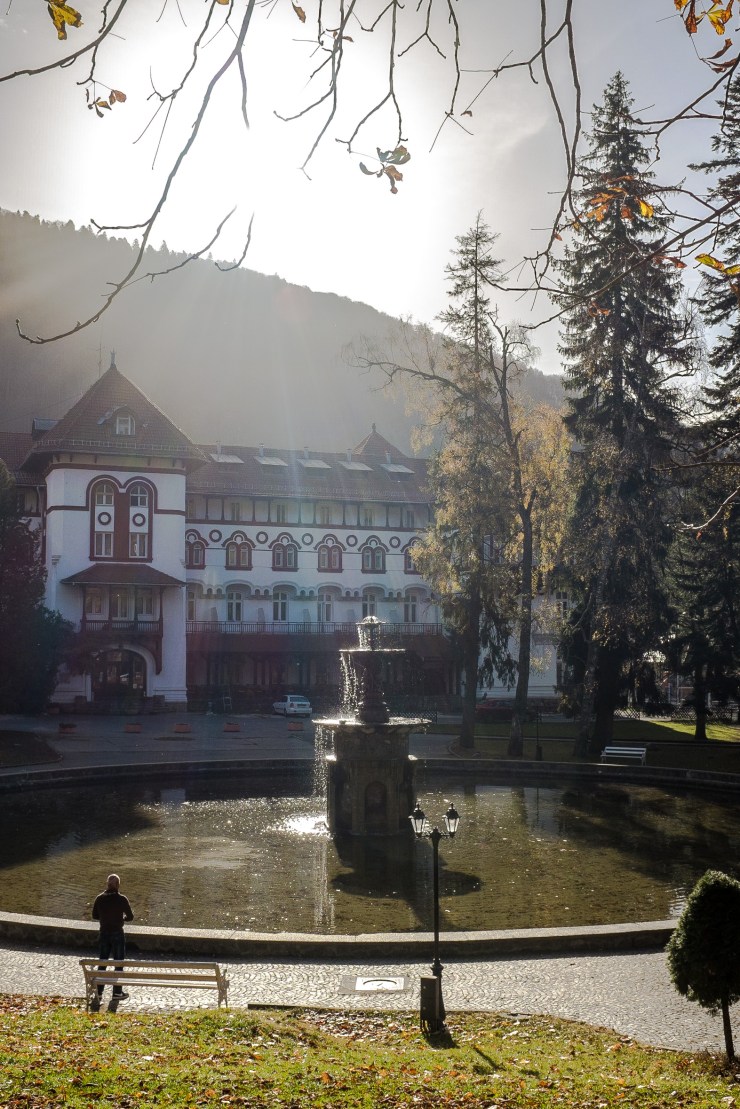
The park is beautifully maintained and the lack of people is a strong reminder that this is the off-season. You can hear birds chirping and I feel like sleeping on a bench for a little while. I have the pasties from dehydration and I start looking for an open shop. I realize it’s not even 9 yet and, since it’s Sunday, most stores won’t be open any time soon. I decide to make do and simply wander the park enjoy its many views.
There are old, monumental buildings everywhere, all seemingly built in the the ‘Romanian’ architectural style.
I feel tired and lack my usual enthusiasm to document my surroundings.
I want to get to Peleș Castle as soon as possible so that I can then get back on the train and drop my heavy, cumbersome bag at the hostel in Brasov. I nevertheless remember my promise to take it slow and so continue to wander the park and reading the many posted signs. Years and events blend into one another.
However, quick research indicates that The Dimitrie Ghica Park was established in 1881, and that the arrangement was done under the supervision of the Swiss landscape architect, Eder (I will find out throughout the trip that most large social buildings and spaces are constructed by foreign hands). It is unclear why this seems to be happening. Why are Romanian buildings seemingly consistently built by foreigners? My mind jumps to conclusions, none of which have any relation to facts, only intuition.
Maybe owners hired outside of the country to impose a sort social status check, or, perhaps, it was due to a lack of well known or educated architects at the time of construction, or, and this seems the most likely, rich Romanians at the time had strong ties with German and Swiss aristocracy.
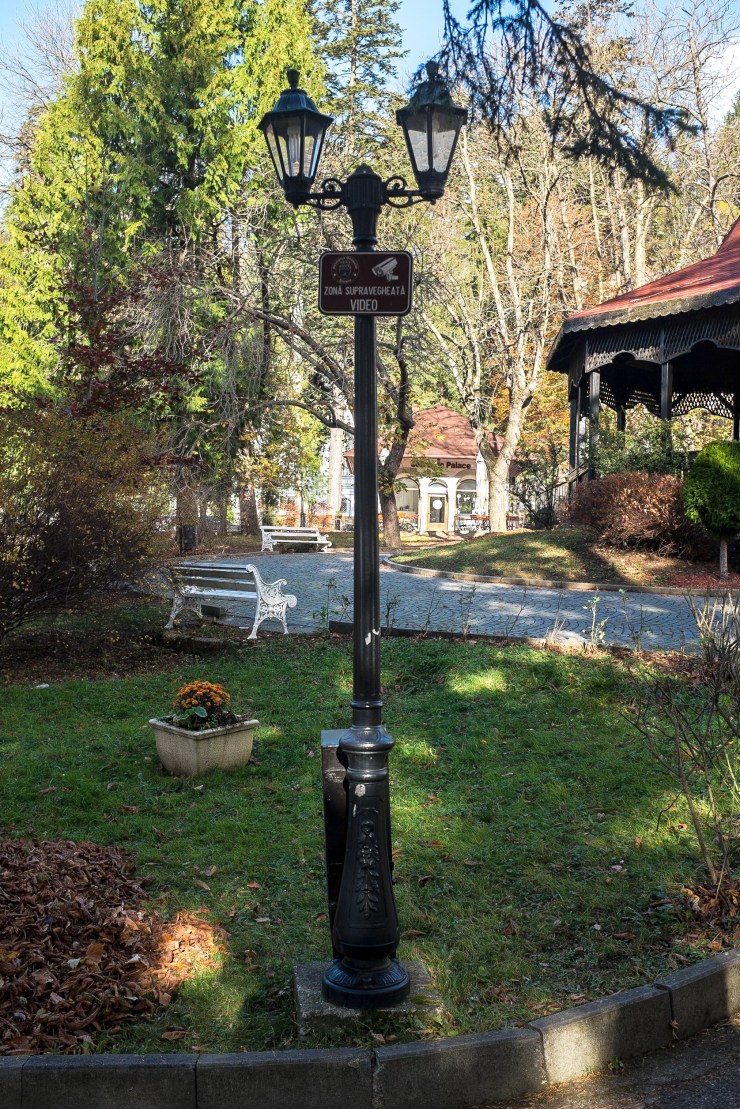
A sign says that this park was one of the first, if not the first, in Romania to run electric lights (I didn’t take down notes). The above photograph, however, shows the specific lamppost where a sign informed visitors of this information.
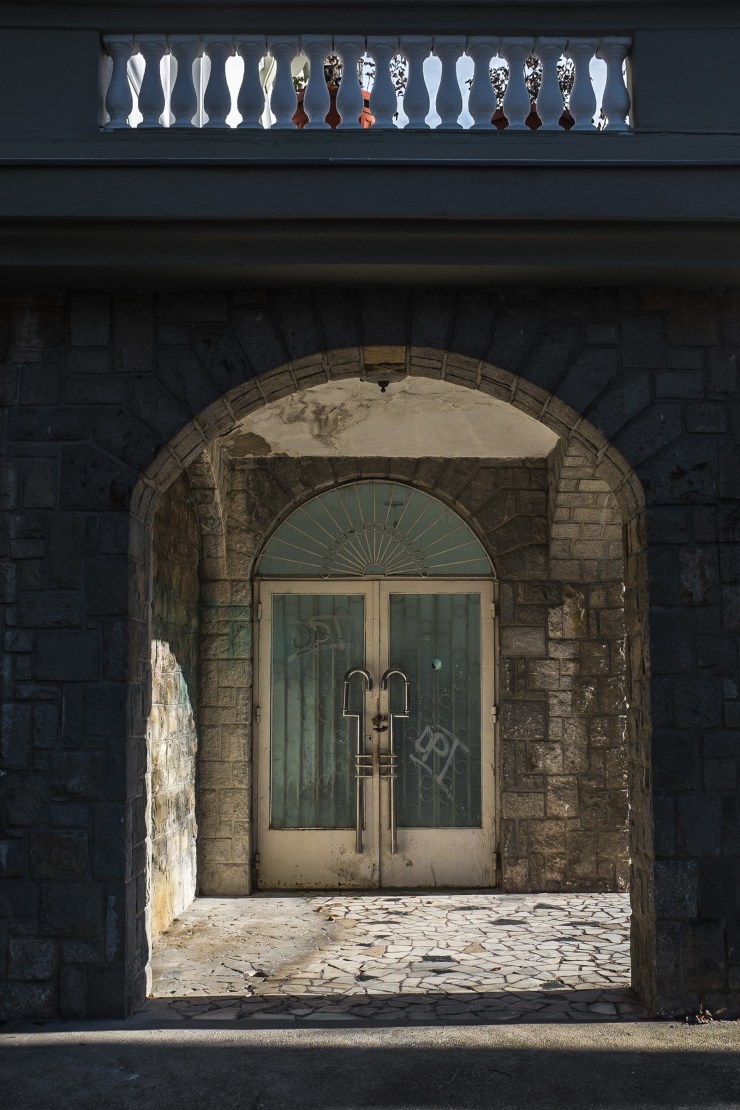
As I meander through the park and signs inform me that there’s a monastery nearby. I walk around trying to figure out the best to get there and realize it is actually on the way to the castle.
I put away my phone and, seeing how long drawn shadows, take note that the park is probably best enjoyed in early morning light or at dusk.
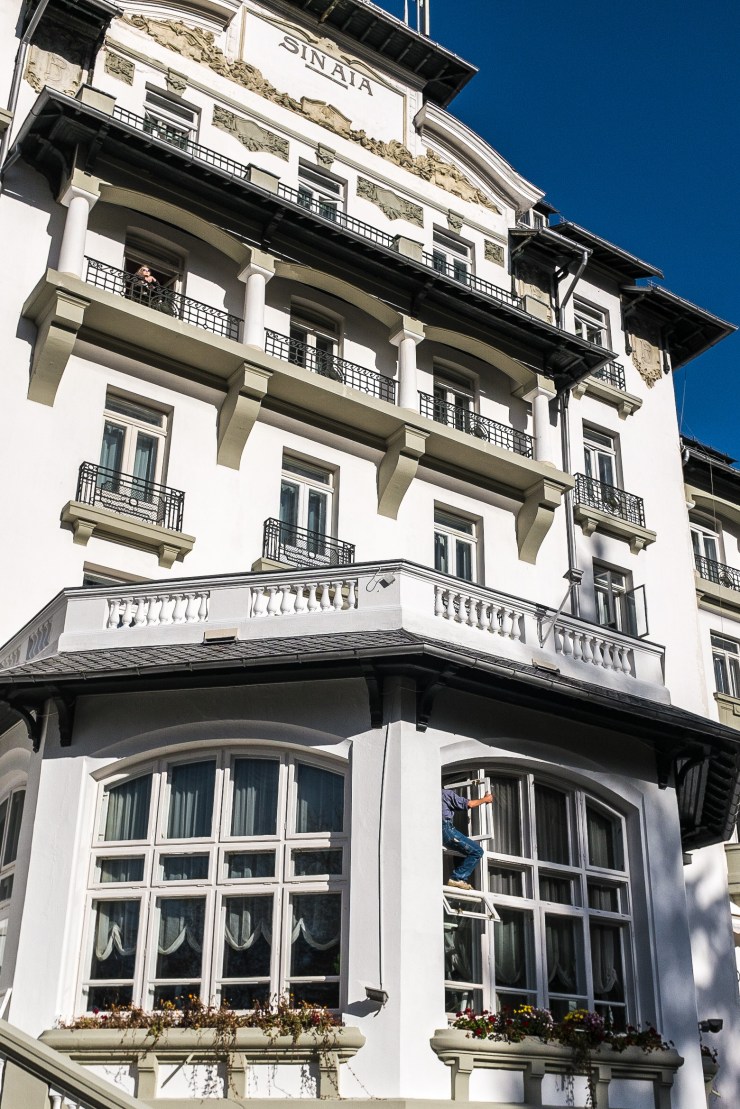
I see an odd arm jutting out of a building and rush to take a photo. I’m happy because the building contains the name of the city and there’s also an onlooker seemingly oblivious to the action below.
These types of photos are my favourite travel photos. They capture a specific time and place and hopefully bring a new perspective to spaces heavily photographed by foreign travellers and locals alike.
I read a sign that informs me that this building contains a very popular seasonal spa. Though it is currently closed, guests from all over the globe visit the building to be invigorated by certain water and aquatic treatments. I think of Verbinski’s A Cure For Wellness and hope I don’t walk into anyone with perfectly white teeth.
I find a road and, checking google maps, see that it leads to where I want to go.
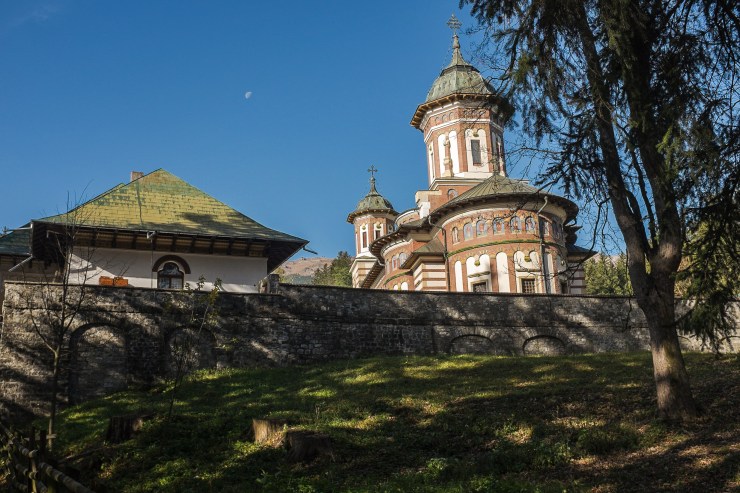
The Sinaia Monastery is inhabited by 13 Christian Orthodox monks led by Hegumen Macarie Bogus. The grounds are quiet and clean. There are few visitors.
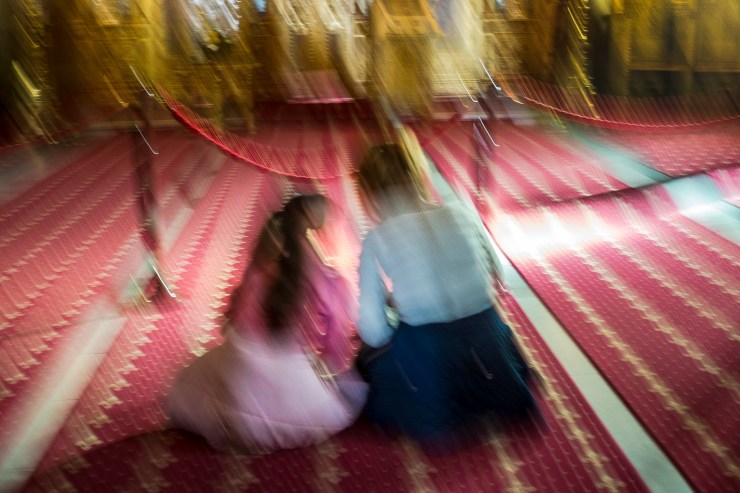

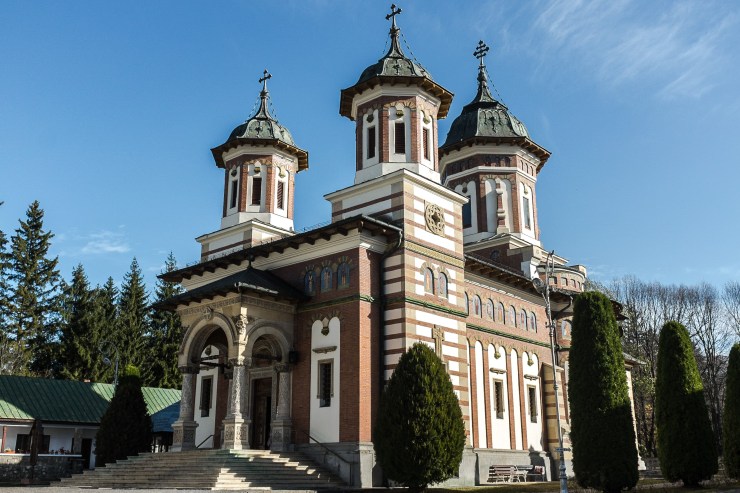
At best I could be called spiritual, at least agnostic. That being said, I do love old churches and almost always find some joy in their intricately planned and softly glowing interiors.
This one doesn’t disappoint. Inside the church, the space is beautifully ornate and, arguably, excessively, decorated in gold. As I enter, I notice a monk? interacting with a young child and his parents. The monk has a long beard and is very calm. The child reaches for his ornate robes and the parents slap his hand. The priest then calmly extends his robe and lets the child rub its gold thread. The child, encouraged by this gesture, tries to grab ahold of the monk’s jewellery, only to be calmly, quietly brushed away. This same pattern is repeated twice without a word being said. The monk then says a final prayer, the family makes the sign of the cross and they all walk away.
The couple and their child look happy to have been blessed and glad to have interacted with the monk. I walk out of the church after them glad to have witness a positive interaction in church.
I look at google maps and there seems to be two roads to the castle. I choose the wrong one, the longer one and finish by enjoying myself.
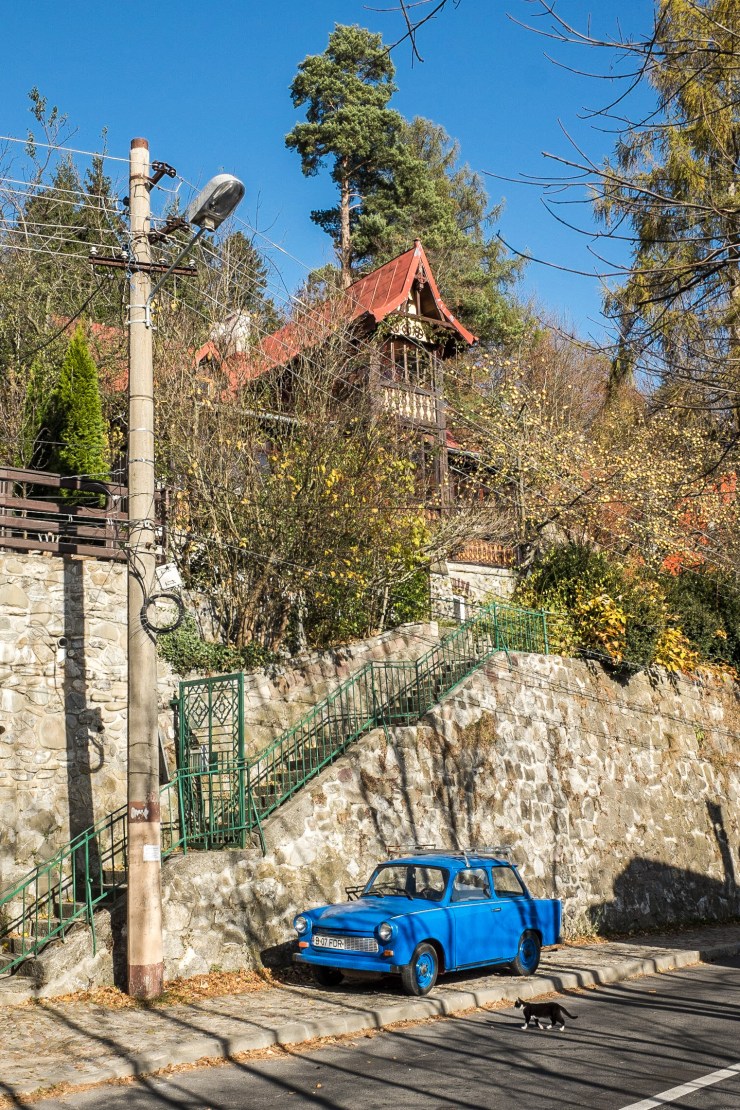
I see more cats and old cars and I am suddenly happy I took the long way round. Sinaia is truly beautiful and it is somewhat reminiscent of Sintra in Portugal.
That being said, it feels a little hollow.
It is a village most would love to visit but few would want to live in. Why?
The village is small and consists of a few shops and various ‘traditional’ homes. In the off season, I am sure everything is closed on Sundays. This is not necessarily a bad thing. For shop owners, it is great to have time off and enjoy some R&R after the long tourist season, for consumers, it means you need to plan more than you’re probably accustomed to.
As for the village, the roads are winding and streets signs repeatedly point towards the castle. Surely, this is a village that exists because of the castle and it turns out, this is more than a hunch. I am told that when Romanian royalty first constructed this summer home, strategically placed on the Transylvanian border, they did not want to feel alone in the woods and so people were encouraged to move there and it seems, many stayed.
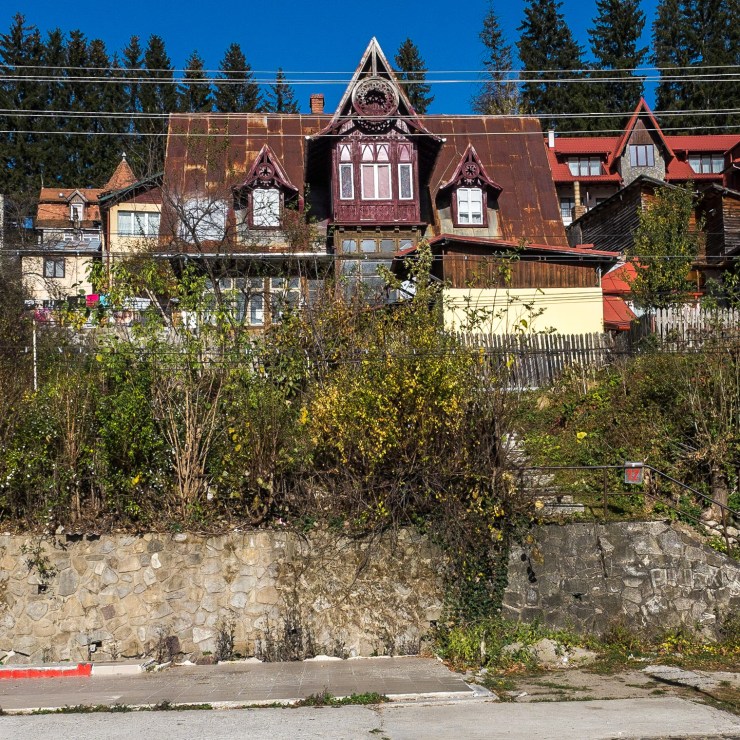
The village seems ripe for exploration and I regret being in such a rush to make it to the castle. My heavy bag and my growing sense of dehydration did little to encourage a stroll.
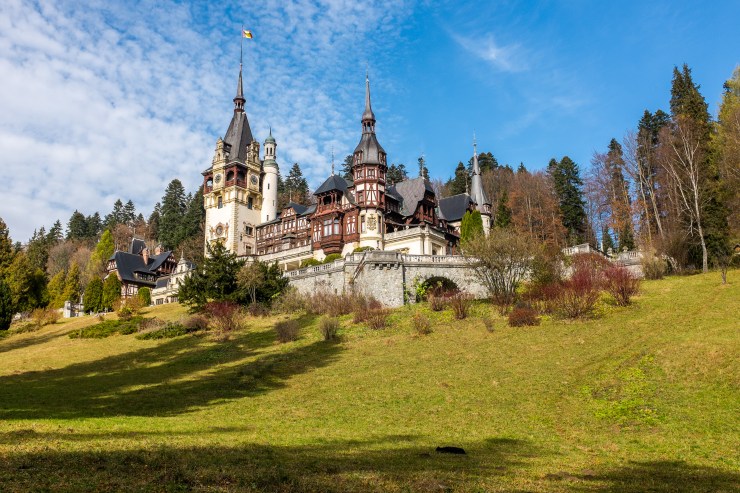
I finally make it to the castle and discover that it is closed on Mondays and Tuesdays.
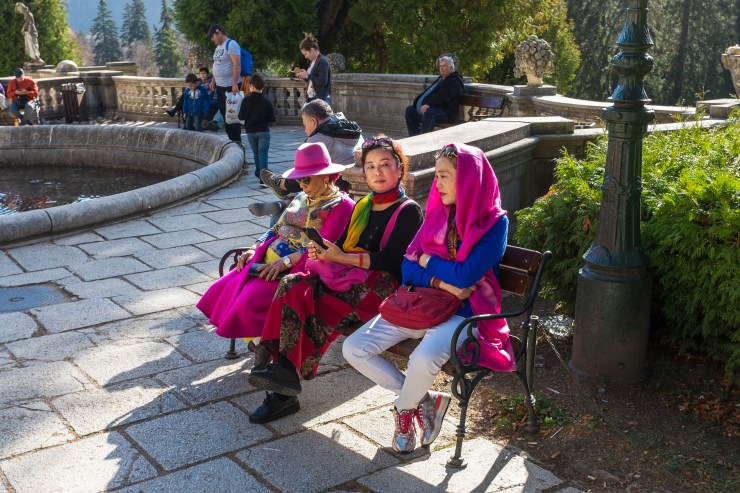
I should have planned better. I then find out that October 31st will be its last day before they do a total overhaul of the the building in the month of November. I take solace in the fact that I can at least wander the grounds without being overwhelmed by tourists (those are my initial thoughts). I am proved wrong, rather quickly.
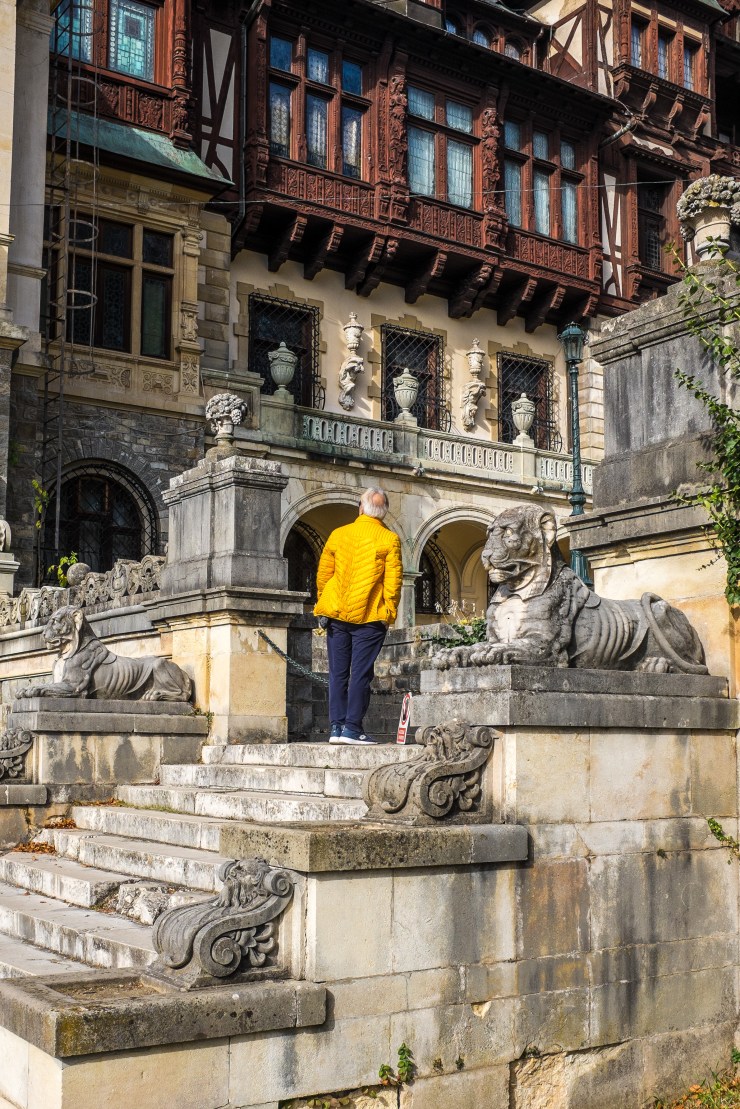
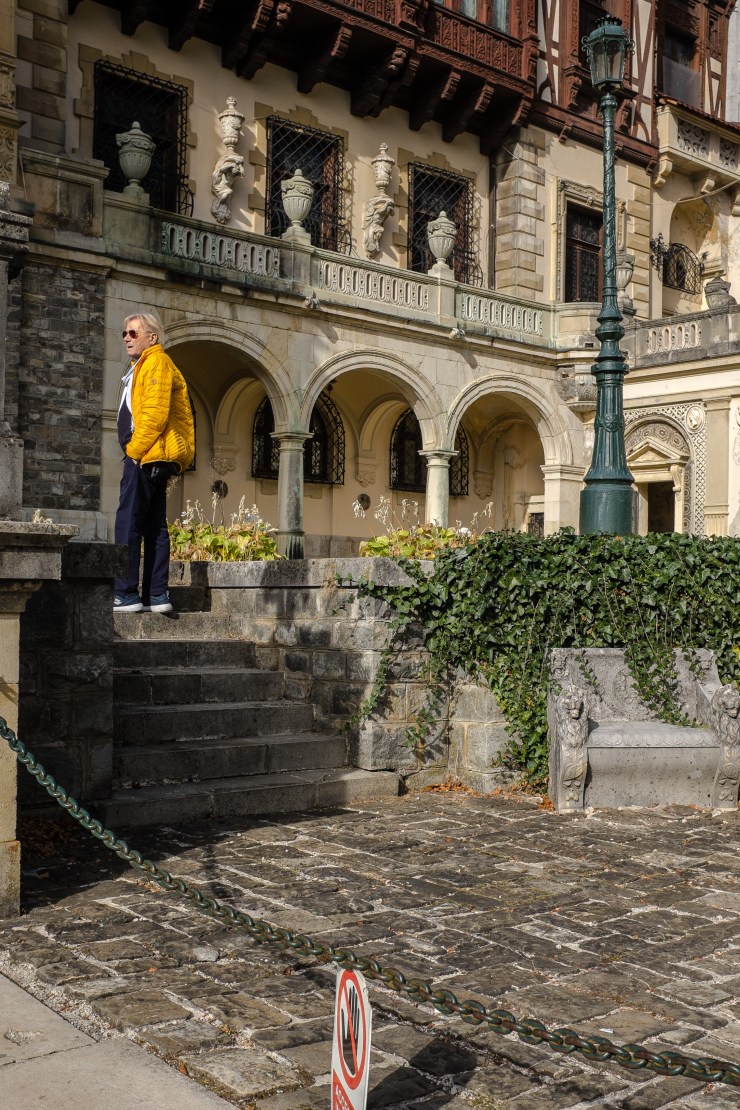
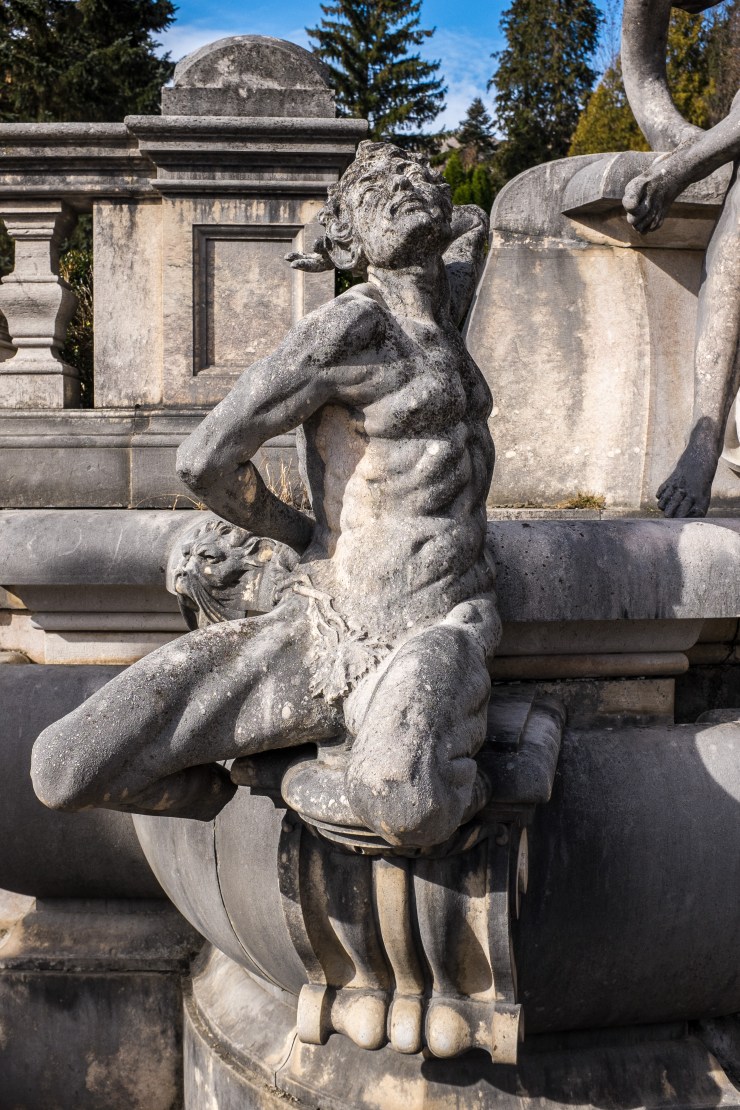
Intricate, beautifully carved sculptures can be found throughout the castle grounds.
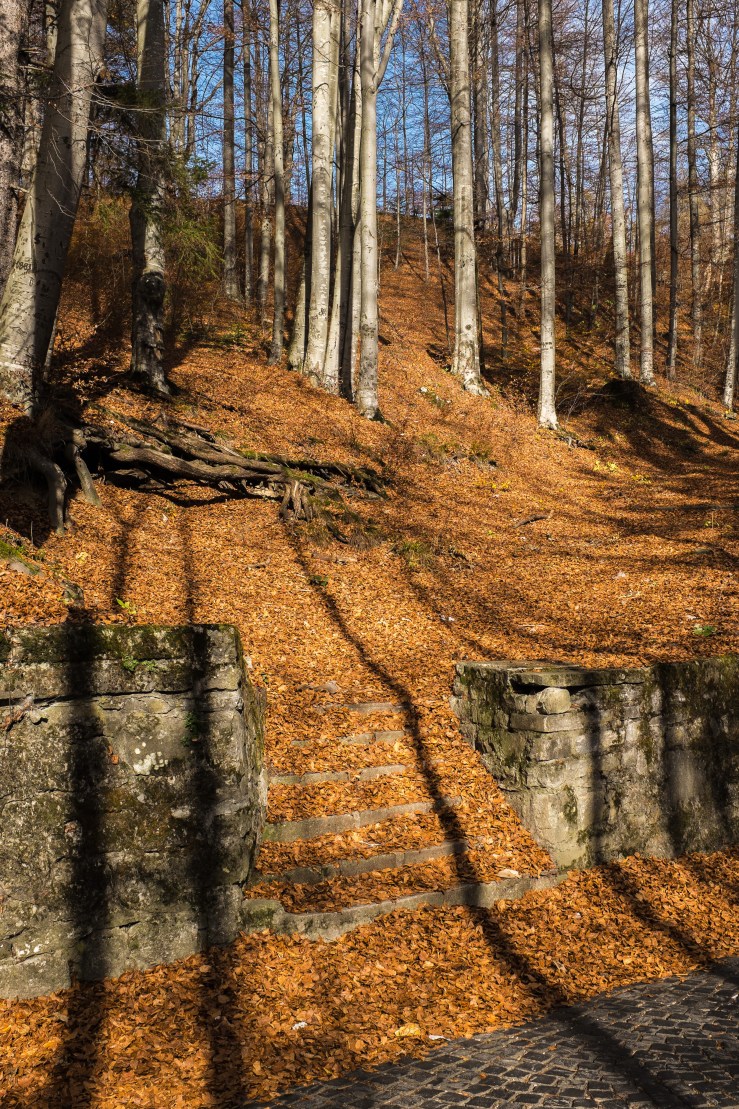 I make my way back down to the train station. I tell myself if there’s a long gap I’ll just wander the city a little more and grab a cheap beer.
As I get into the station a bus pulls in and a driver quickly jumps out and hands people their bags. I ask if it goes to Brasov.
He says yes. I pay 11 Lei and fall asleep almost immediately surrounded by odd Romanian Muzak and older, quiet women.
 describing space